Utagawa Hiroshige
Born into a Samuri family at the turn of the 19th century, Hiroshige grew up to become a master of the Ukiyo-e woodblock printing arts in Edo-period Japan. Ukiyo, also known as “The Floating World”, was a buoyant philosophy of living, known for its highly entertaining and hedonistic culture. Unlike the artists of The Floating World, who were known for painting fashionable figures and vigorous scenes, Hiroshige was interested in capturing a serene vision of life. Using nature as a focal point, his work displays peaceful landscapes with vibrant elements, reflecting on the natural rhythms of life.
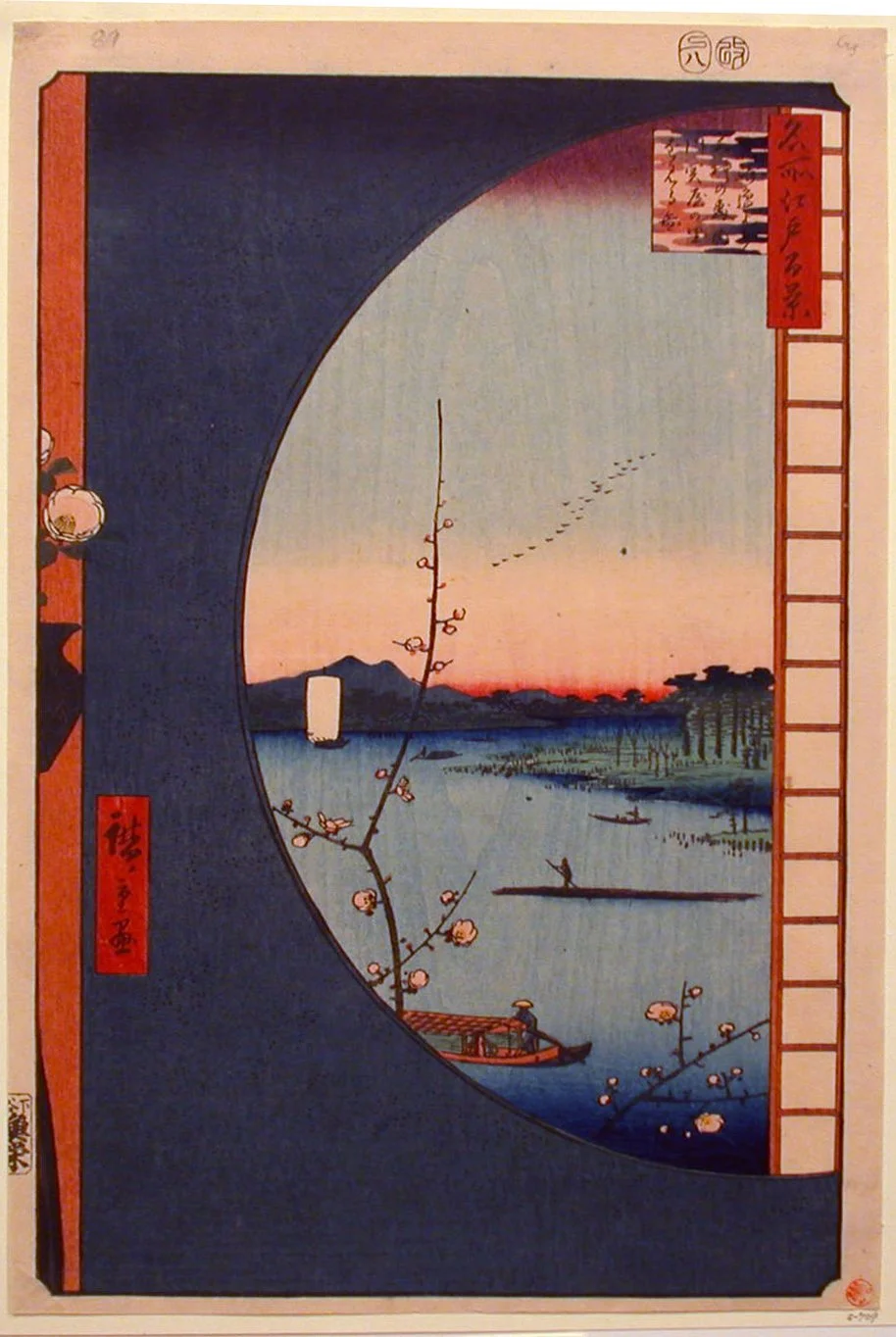
What Can Hiroshige Teach us About the Trees?
Framing & Composition- Hiroshige often used trees as a focal point in his work. The trees are purposely arranged so that the viewer must engage with the tree before proceeding to the rest of the scene. This technique inspired other artists such as Vincent Van Gogh, who created his own version of Hiroshige’s The Plum Garden at Kameido.
Mono no Aware & Hanami- Hanami, or “flower viewing”, is a traditional Japanese custom that signifies the arrival of Spring. Hanami originated in the Edo period, where the elite enjoyed acts of entertainment and leisure. This was a time when woodblock prints flourished. Woodblock prints are made from Cherry wood, which is fitting for Hanami centered around Cherry Blossoms (Sakura). Cherry Blossoms bloom for a short period, acknowledging the impermanence of life and death. In Shinto Spirituality, Cherry Blossoms are symbolic of Mono no Aware, the philosophical understanding and appreciation for inevitable change.
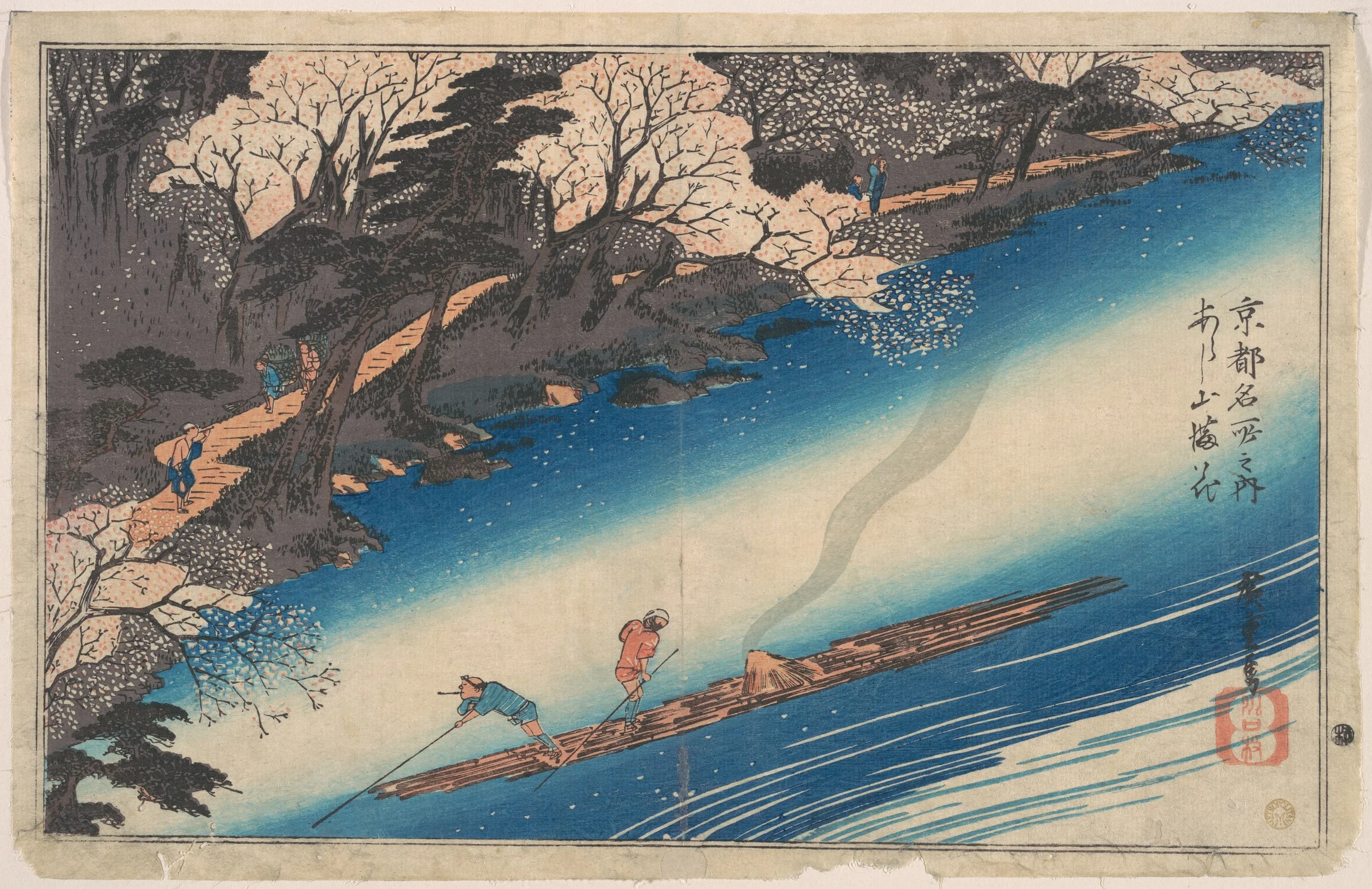
Cherry Blossoms at Arashiyama, from the series Famous Places of Kyōto
Utagawa Hiroshige (Japanese, Tokyo (Edo) 1797–1858 Tokyo (Edo))
(1615–1868)
In Shinto Spirituality, trees symbolize longevity, strength, and ephemeral nature.
NEW Workshop! Seasons Turning|Spring
Join us on April 11th with Mercurial Girl Studios for a guided workshop to help you feel grounded and launch into Spring. Tap into your roots with a mini astrology reading and set intentions for the new season by creating DIY Oracle Cards. Register today!
Works Cited
Nan, Feng. “Rooted in Reverence: Japan’s Enduring Bond with Trees.” WLLW, 5 May 2025, wllw.eco/blogs/journal/rooted-in-reverence-japans-enduring-bond-with-trees?srsltid=AfmBOopvGgycKnDOmhefbn0A1Jn3t5JdjMOh76xDkzyfAuSuR-CHIz4m. Accessed 1 Apr. 2026.
Tep, Ratha. “Inside the Japanese Tradition of Cherry Blossom Viewing | HISTORY.” HISTORY, 26 Mar. 2025, www.history.com/articles/japanese-cherry-blossom-viewing-tradition-sakura-hanami.
Affairs, Berkley Center for Religion, Peace and World. “Mono No Aware: The Transience of Life.” Berkleycenter.georgetown.edu, 18 Jan. 2017, berkleycenter.georgetown.edu/posts/mono-no-aware-the-transience-of-life.
Art Institute Chicago. “Utagawa Hiroshige.” The Art Institute of Chicago, www.artic.edu/artists/34946/utagawa-hiroshige.
“Introduction to “Hiroshige: Artist of the Open Road.”” The British Museum, British Museum, 2025, www.britishmuseum.org/blog/introduction-hiroshige-artist-open-road.
